|
The Divine is all around us in all its beauty.
One of its forms is mushrooms. Most of these small life forms have a shaft
and cap, and produce spores to multiply. But some take unusual shapes. The
mycelium ( equivalent to root) usually is hidden under bark, ground, rotten
wood, or leaves. Click on the pictures for a larger version. |
| Commonly referred to as either the Shaggy Inkcap or the Lawyer's Wig, Coprinus comatus is a large and conspicuous edible (when young and fresh) fungus. It occurs in meadows, woods and roadside verges. The young fruit bodies first appear as white cylinders emerging from the ground, then the bell-shaped caps open out. The caps are white, and covered with scales—this is the origin of the common names of the fungus. The gills beneath the cap are white, then pink, then turn black and deliquesce ('melt') into a black liquid filled with spores (hence the "ink cap" name). This mushroom is unusual because it will turn black and dissolve itself in a matter of hours after being picked or depositing spores. |
 |
|
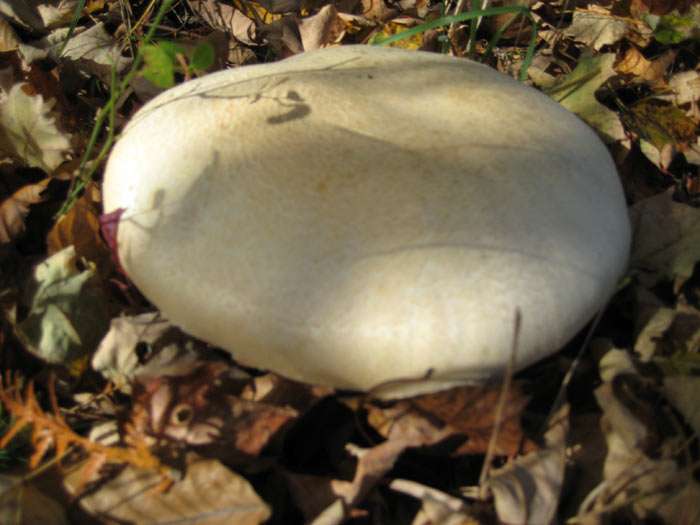
Short thick stem and large cap. cap about 20 cm, or 8",
wide. White color. probably Lactarius deceptivus or Deceiving Milkcap. Was under some trees. The mushroom "bleeds" a milky white acrid latex when it is cut or injured. The fruit bodies are edible, but have a bitter taste that can be removed with cooking. |

 |
|
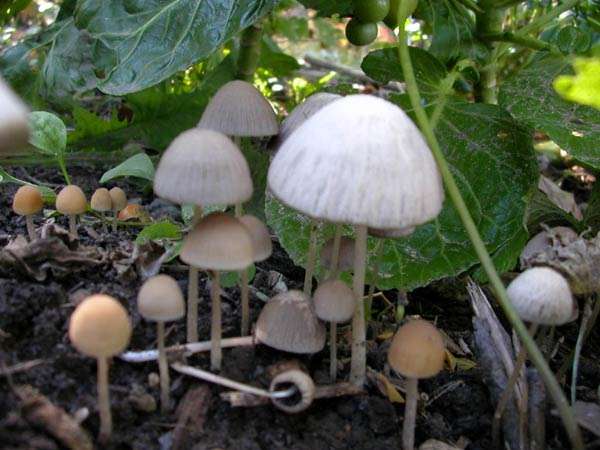
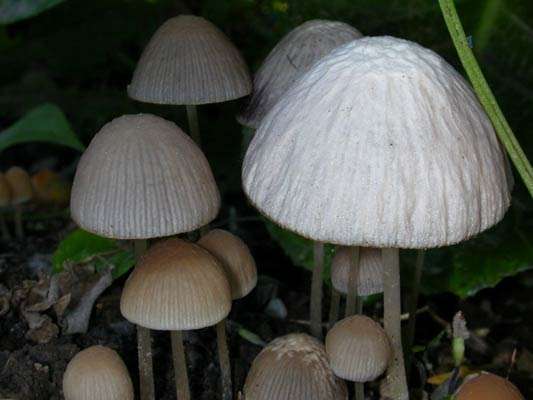
Fairy Ink Cap - Coprinus disseminatus This little Ink Cap occurs in great numbers on dead tree stumps, decomposing and recycling the rotten wood. The caps start off very small, and then develop to slightly bigger than a thimble. When young they are a beige color, but as they age this turns to grey, then black. |
 |
|
Gray Shag - Coprinopsis cinerea Is an edible mushroom, but must be used promptly after collecting. It is wide-spread all over the world. I found it on a woodchip pile that has been sitting in our driveway for a couple of months. It also grows on heaps of mixed dung, rotten straw or vegetable refuse, less frequent on pure dung. |

 |
|
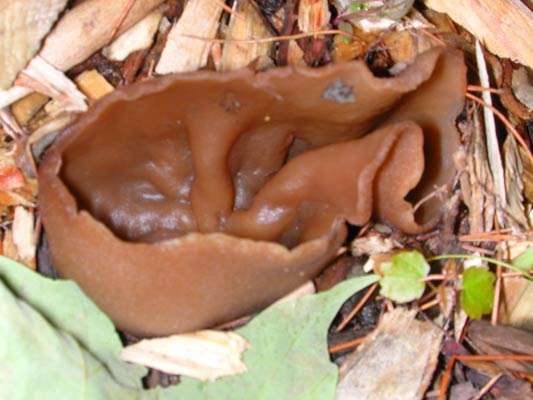
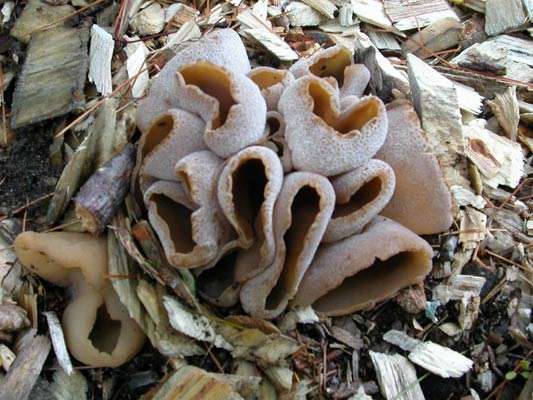
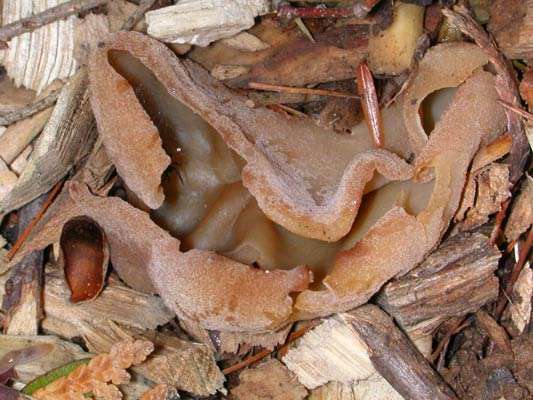
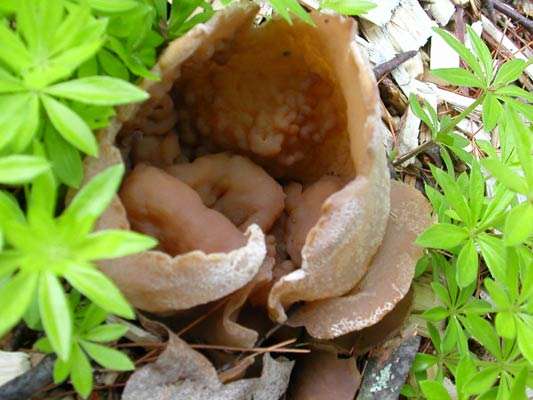
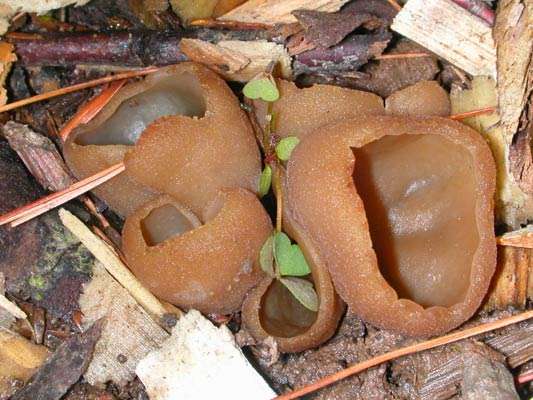
Orange Peel Peziza species This a cup fungi, that is, they are shaped in the form of a cup. They can be large and fleshy, brown to orange. They are usually bowl-shaped when young but will become flattened and distorted with age. They grow on the ground, in fields, lawns or on roadsides. Considered edible. |
|
|
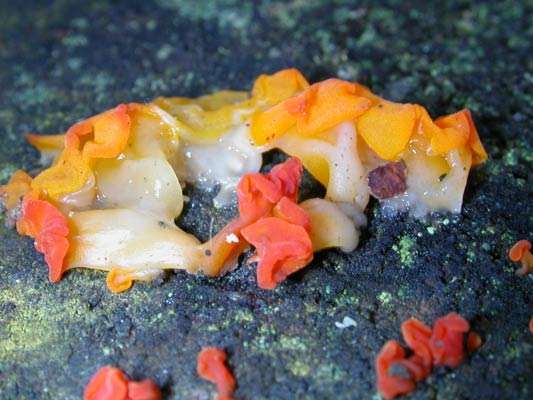
Orange Jelly or Orange Witch's Butter - Dacrymyces
palmatus Fruit bodies are 2-6 cm long by 1-3 cm high, slimy, soft, gelatinous, orange to orange-yellow, spatula-shaped at first but becoming lobed or multi-lobed and convoluted. Common and widespread, it fruits on dead conifer logs and stumps. Considered edible. |
 |
|
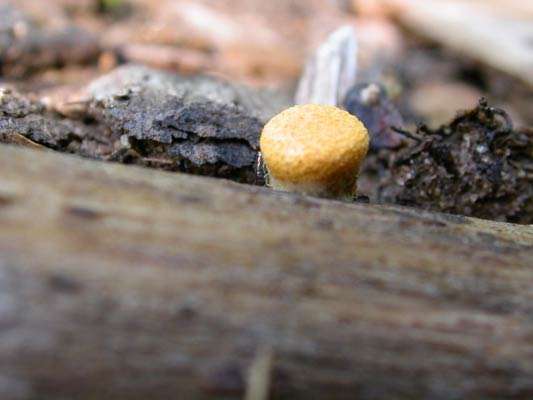
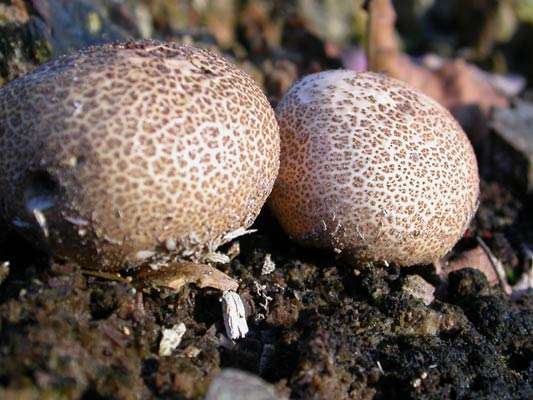
Earth Ball - Scleroderma
citrinum Some authors call the mushrooms in Scleroderma "earth balls," to emphasize their differences from the fleshier puffballs. Many Scleroderma species have tough outer rinds, and Scleroderma citrinum has a rind that is scaly and hard. When sliced, the rind stains pinkish. Inside, the spore mass is initially white, but soon begins to turn dark purple to purple-black, from the center outwards. Poisonous! |
 |
|
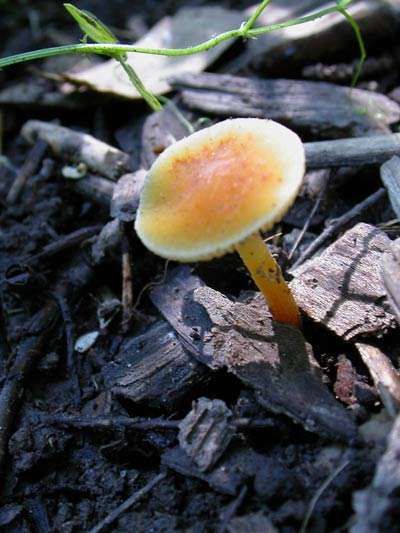
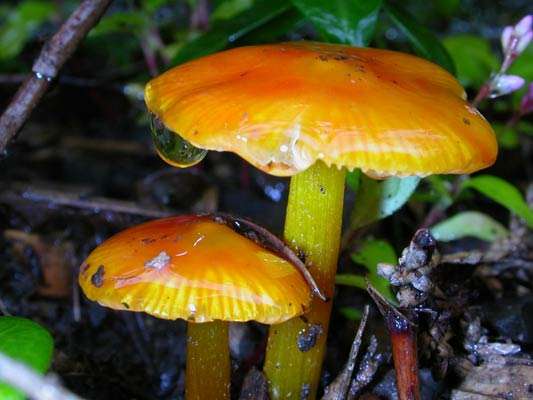
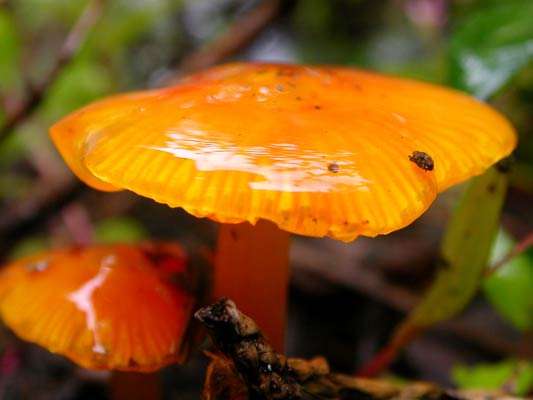
The Parrot Mushroom - Hygrocybe psittacina
This is a wax cap. In its early stages of development it is distinctively green and slimy. But it quickly begins to change colors, turning yellow or orange, and then fading to a sort of dingy straw color. By the end of this transformation, the parrot mushroom has become a nondescript little thing, dirty yellowish and very difficult to identify. Considered edible, but apparently not appetizing because of its slimy appearance. |
 |
|
Probably
Psathyrella species Identification of the many species of this mushroom is apparently very difficult. |


|
|
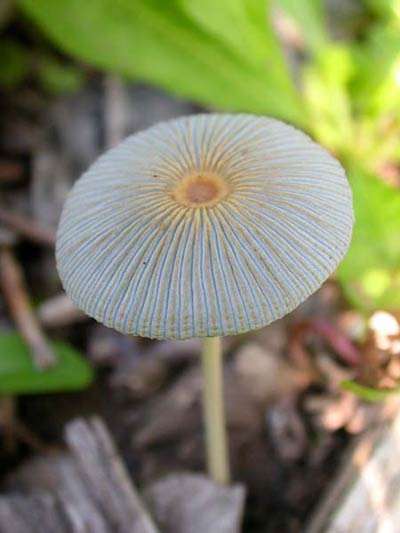
Japanese Umbrella Inky - Coprinus plicatilis A delicate species that last less then a day. Found singly or in small groups after rain. This attractive Ink Cap fruits in grass beside roads or pathways, sometimes in lawns or on well-rotted wood. |
 |
|
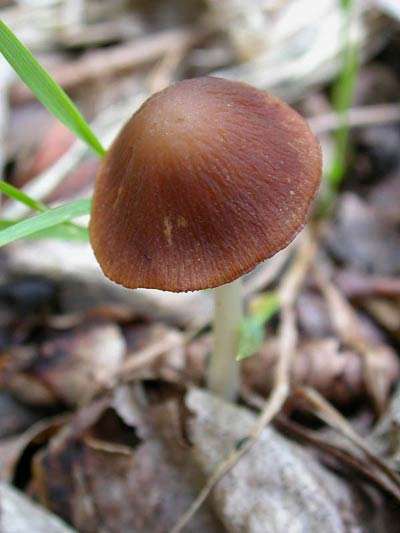
Mycena griseoviridis A small mushroom, with thin white stem. Many species which are difficult to identify.
|
 |
|
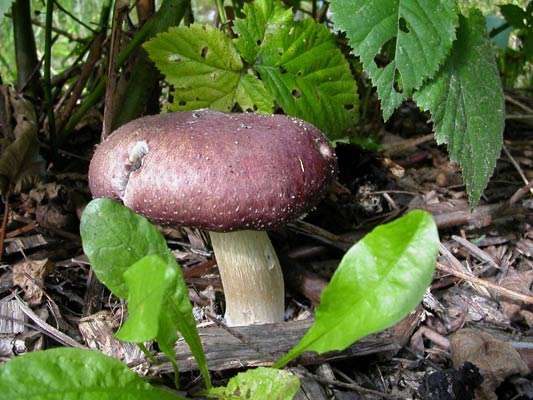
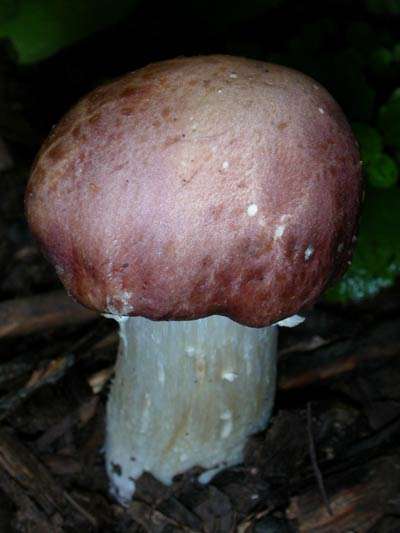
Wine Cap Stropharia
Wine Cap Stropharia Garden Spawn
|

|
|
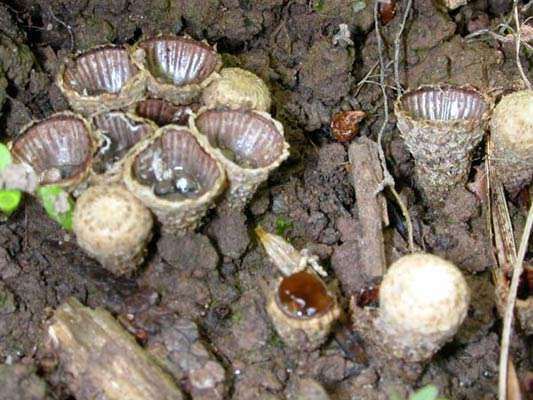
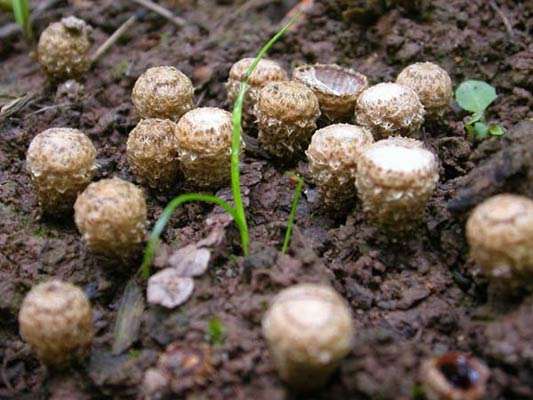
Splash Cups - Cyathus striatus Splash Cups are a common inhabitant of bark or wood mulch. Although less than a centimeter in diameter, Cyathus striatus often grows in huge clusters, thus making them easily visible, even from some distance. The common name "bird's nest fungus" should be obvious to anyone looking at the small mass of "eggs" within the small "nests" or cups of the fruiting bodies. The "eggs" in the nest contain the basidiospores within them. These "eggs" are actually analogous to tiny puffballs in that they contain the basidiospores inside of them. |
 |
|
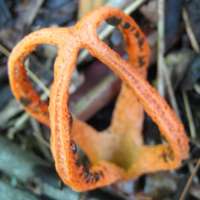
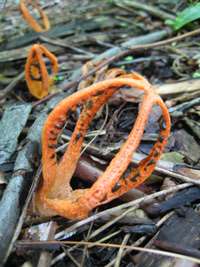
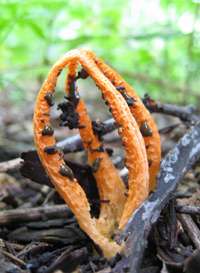
Stinky Squid - Pseudocolus fusiformis I found this one by its smell. I had smelled what I rhought was the rotten carcass of an animal. Then I found this strange shape of something that turned out to be a mushroom. The arms are fused at the top but can come apart. There were many of them frowing in the woodchips. The Stinky Squid begins life as an "egg." As this egg absorbs water and expands, the tentacle like fruit body appears. Each tentacle is coated with an olive-green spore mass (gleba) whose odor is quite rank. Rank, that is, to human nostrils. To flies, the odor is irresistible; as the main vectors of spore dispersal, they're attracted to Stinky Squids like flies to, well, feces. Then off flies the fly, unknowingly spreading P. fusiformis spores wherever it lands. A tropical species, the Stinky Squid was first reported in North America in Pittsburgh in 1915. A few decades later, it appeared in New England |
|
|
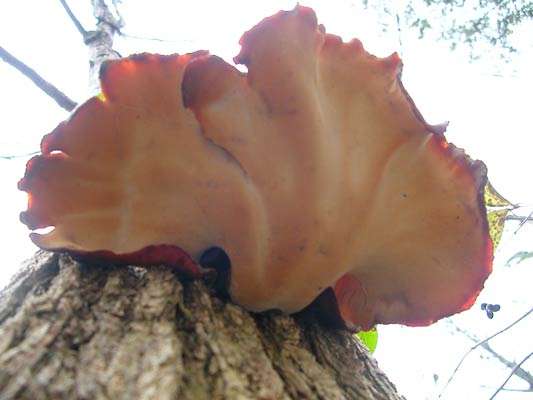
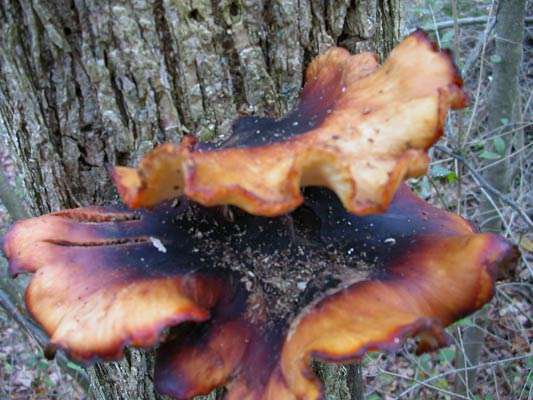
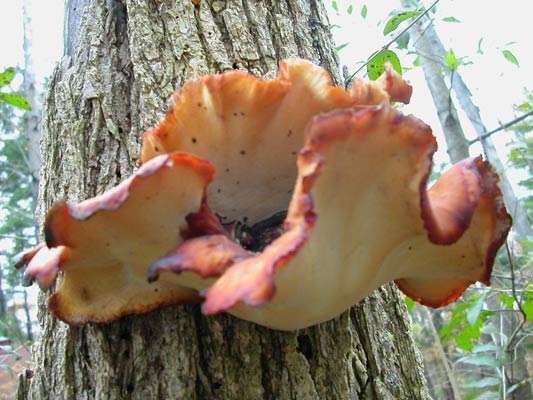
First I thought it might be The Chicken of the
Woods - Laetiporus sulphureus species
but it is most likely another species |
|
|
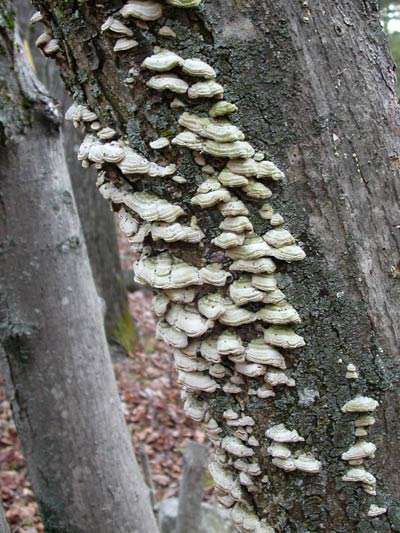
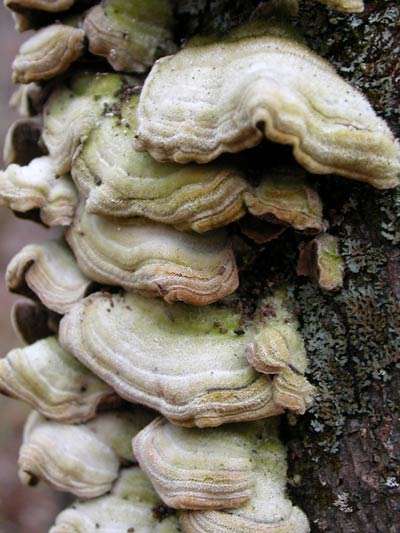
Lenzites betulina Grows on on the dead wood of hardwoods and, occasionally, conifers. Inedible |
 |
| The following mushrooms I was unable to identify: | |
|
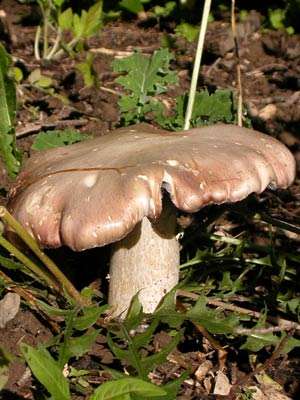
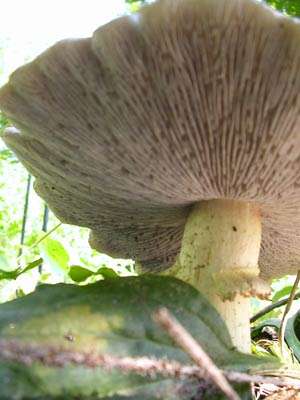
probably Wine Cap Stropharia
|
|
|
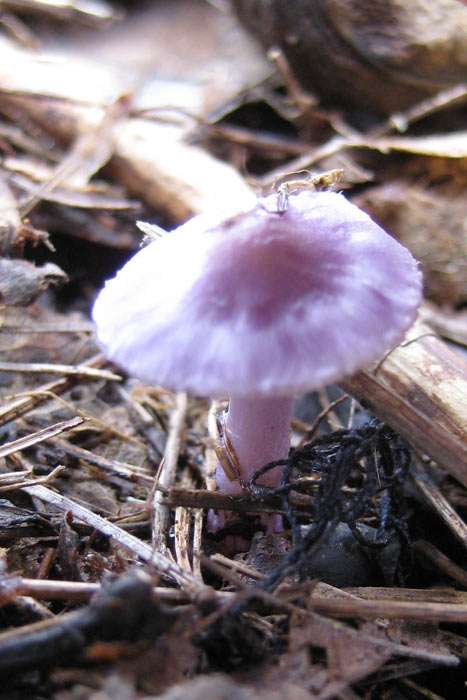
Cortinarius iodes This small, about an inch high, mushroom was growing under my blackberry plants. Delicate. With light purplish cap, more saturated purple in the middle. The gill color changes from violet to rusty or grayish brown as the mushroom matures. |
 |
|
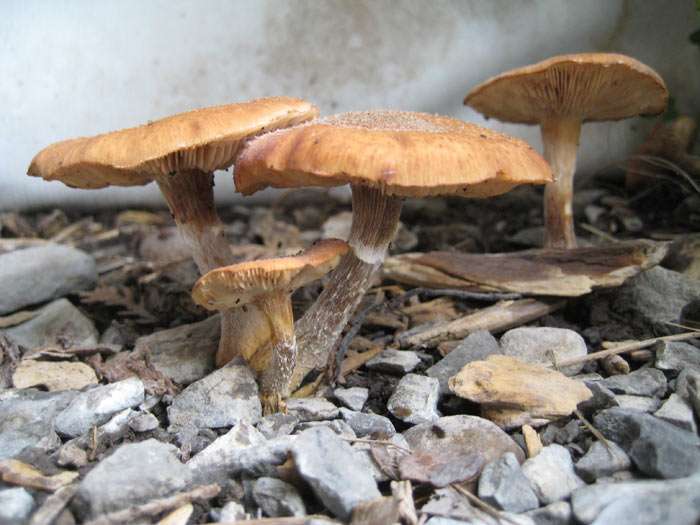
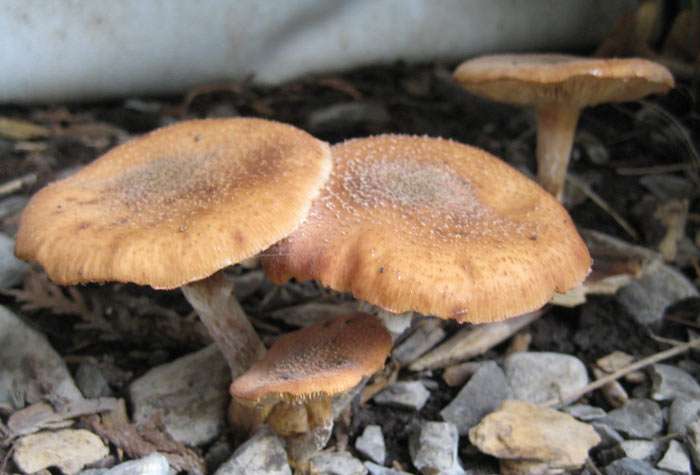
Desarmillaria caespitosa, or Ringless honey mushroom It was growing under my open garage port, on wood chips. Normally they grow in large clusters at the base of trees. |
 |
| Unidentified |
 |
| Unidentified |
 |
| probably also Wine Cap Stropharia |
 |
|
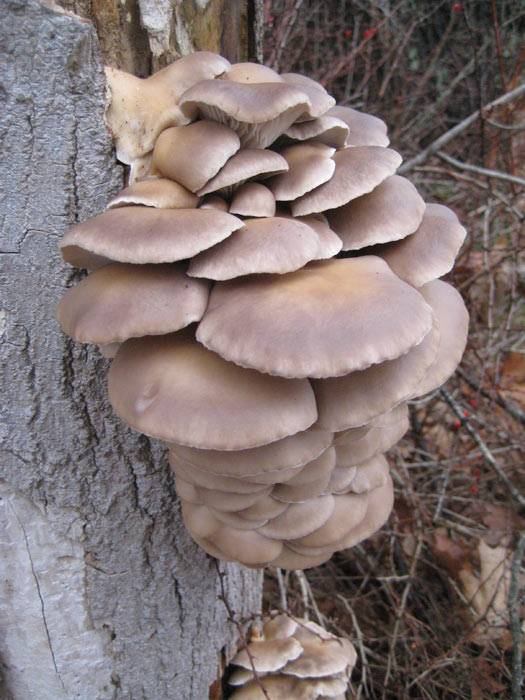
Pleurotus ostreatus, the oyster mushroom, oyster fungus, hiratake, or
pearl oyster mushroom is a common edible mushroom. I found it on a dead
tree in the neighborhood. The oyster mushroom is also used to create mycelium bricks, mycelium furniture, and leather-like products. |
 |
|
Physarum polycephalum One day I found a strange bright yellow patch of something in my garden, covering the wood chips of an about one square foot. It is not a mushroom or fungi, although it was once placed under the fungi. The English name is Slime Mold, and is presently classified under Amoebozoa. It lives in shady, cool, moist areas, such as decaying leaves and logs. It is a really strange life form. basically the start out as individual large cells of protoplasm, which join together to form one single entity with many nuclei. The end up forming one big cell about a foot big with millions of nuclei in it. AND it also moves around! A couple of inches a day. It eats fungal spores, bacteria, and other microbes, and thus if found primarily on decomposing matter. But when the food runs out it starts its reproductive cycle and produces spores, and dries up.
|

 |